
The Manager’s Meeting Standard
Getting Things DoneA simple question at the end of discussion changes meetings from shared ambiguity into explicit decisions about action and responsibility.
increasing Bearing strength in each event
 decreasing
Bearing strength in each eventdecreasingDiscussion Without Closure

Meetings Leave Loose Ends
Vague Agreement
People may leave a meeting with a general sense that something should happen, but without a precise account of what, when, or by whom. The uncertainty persists after the conversation ends.
In collaborative settings, participants may assume that someone else will take the next step.
The Cost of Politeness
Avoiding direct questions about responsibility can seem courteous, yet it leaves people unclear. Work is then delayed until another discussion or an external deadline forces a decision.
The meeting becomes a source of open loops rather than a place where they are closed.
The Question Enters the Room

Asking Before Time Runs Out
A Deliberate Intervention
Allen learns to raise the next-action question well before the agreed end of a meeting. He reports that the final portion of discussion often requires significant clarification and difficult decisions.
The question is simple, but it forces participants to connect talk with physical follow-through.
Testing Commitment
A group may discover that it is not ready to allocate time or resources, or that it does not know what it wants to accomplish. Such answers are useful because they expose uncertainty rather than disguising it.
The meeting gains a route toward a decision, even when the decision is to pause.
Ownership Becomes Explicit
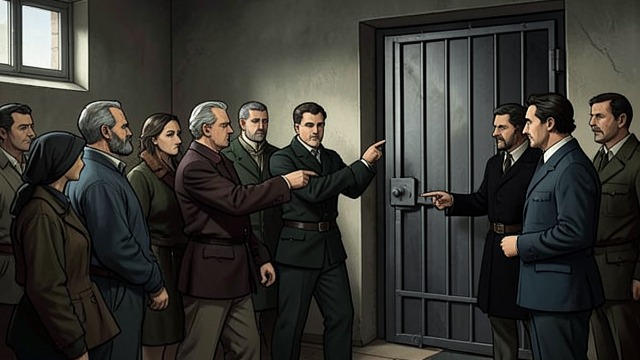
Naming the Responsible Person
Mine or Yours
Participants identify whether any action is needed and who will take it. Responsibility no longer rests in the vague hope that the group as a whole will somehow proceed.
The explicit assignment can reveal missing information, dependencies, or disagreement.
A More Respectful Exit
Allen argues that clarity is more respectful than letting people depart unsure of their obligations. Each person can leave with a better understanding of what is expected and what is not.
The group’s shared purpose becomes more operational when ownership is visible.
The Follow-Up Is Trackable

Turning Agreement into a Reminder
A Concrete Record
The assigned next step can be placed in an action list or tracked as something expected from another person. That record reduces reliance on memory and makes later follow-up possible.
Responsibility can move between people as the work develops, but each handoff should be visible.
Keeping the Discussion Alive
A completed conversation does not finish the project. The resulting reminders preserve the work’s next movement outside the meeting room.
The action question therefore connects meeting behavior to the broader system of review and organization.
A Different Team Habit

Clarity as Culture
More Responsive Work
When a team routinely decides the next action and owner, fewer matters remain suspended in ambiguous discussion. Work can begin earlier, and follow-up becomes easier to assess.
The standard does not remove disagreement or difficulty; it makes their consequences clearer.
Empowerment Through Action
The question invites people to identify something they can do rather than remain in complaint or passivity. Its repeated use changes expectations about what a completed conversation should contain.
A small procedural habit can reshape the group’s everyday operating culture.
Before the next-action standard is adopted
During Allen’s facilitated meetings
As the discussion reaches a conclusion
After an action is assigned
As the standard spreads through a group
